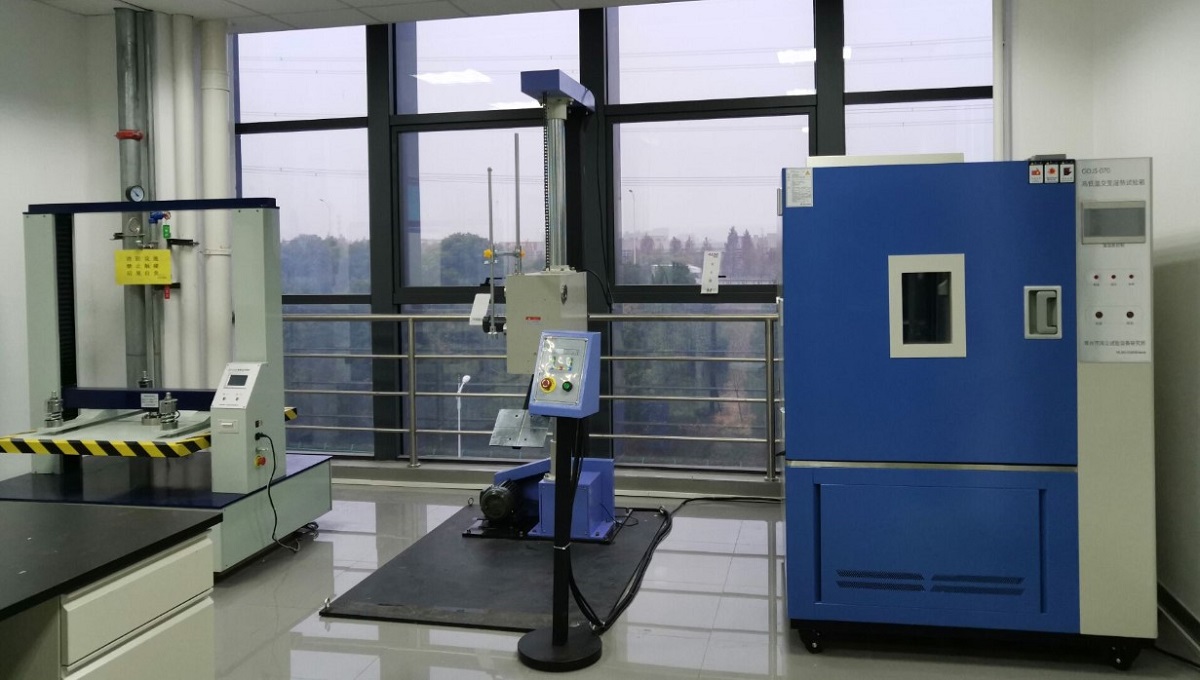
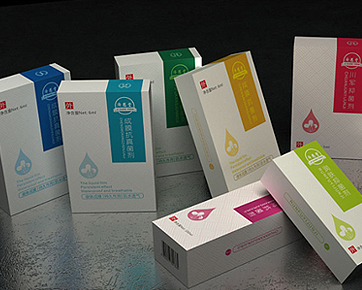
In recent years, the printing and packaging industry has ushered in a new era of intelligent development, and "intelligent" and "intelligent manufacturing" have increasingly become a new opportunity for the development of China's printing and packaging industry. Under the conditions of smart factories, the improvement of quality detection indicators in the production process of tobacco and pharmaceutical packaging boxes and the realization of intelligent control are insurmountable necessary conditions for the development of intelligent manufacturing in the printing and packaging industry.
Since the reform and opening up, China's cigarette packaging has achieved rapid development, especially in recent years, the replacement of packaging is dizzying. As far as paper cigarette packaging is concerned, from soft bags to ordinary white card hard bags, to glass cards, to the popular aluminum foil gold and silver cardstock in recent years, and then to the introduction of high-end frosting process using PET composite cardstock, cigarette packaging has been in the forefront of the national packaging industry, forming a new fashion of "paper packaging to see cigarette packets".
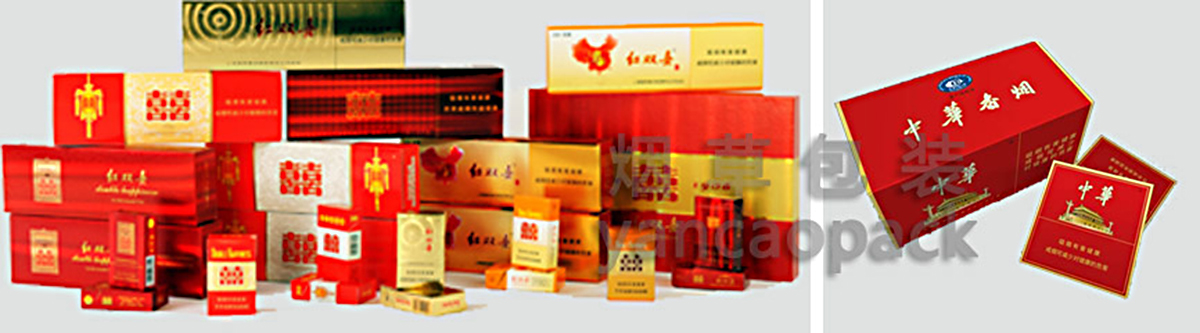
Tobacco medical paper packaging belongs to the industry's technical difficulty and process requirements of the most high-end printing packaging products, the production process involves creative design, environmental protection technology, anti-counterfeiting technology, multi-process combination printing technology and other technologies. At present, such packaging printing mainly includes four steps: design, plate making, printing and post-press processing, especially in the production process of cigarette labels, it is necessary to use a variety of processes such as offset printing, gravure printing, screen printing, gilding, embossing and so on. The complex processes in printing and post-press processing and the combination of many different processes are the main characteristics of the development of the industry.
Specifically, tobacco medical paper packaging products have higher requirements in terms of anti-counterfeiting, flatness, gloss, smoothness, wear resistance, processing accuracy, VOCs control and so on.
1. Relevant standards and testing items of cigarette pack products
Conventional cigarette products are divided into: inner lining paper, cigarette frame paper, bonding paper, cigarette label paper, cigarette wrapping paper.
Cigarette paper implementation standard: GB/T 12655-2007
Physical detection indicators: sample pretreatment, appearance size, quantification, tensile strength, elongation, moisture content, air permeability, dust, opacity, ash, whiteness, flame retardant rate, tensile energy absorption.
Execution standard of hydropine paper: QB/T 1019-2010
Physical detection indicators: sample pretreatment, appearance size, quantification, tightness, tensile strength, moisture content, air permeability, ash, whiteness, smoothness.
White cardboard implementation standard: GB/T 22806-2008
Physical detection indicators: sample pretreatment, appearance size, quantification, tightness, break resistance index, water absorption, smoothness, bending stiffness, Taber stiffness, whiteness.
Offset printing paper implementation standard: QB/T 2693-2005
Physical detection indicators: sample pretreatment, appearance size, quantification, breaking length, elongation, moisture content, water absorption, folding resistance, smoothness, dust, opacity, ash, whiteness, PH value, roughness.
Tobacco packaging boxes are generally divided into two kinds, one is long, one is bulk. For ease of carrying, bulk cigarette boxes are generally 5 cigarette boxes, 7 cigarette boxes, 10 cigarette boxes, 14 cigarette boxes, 20 cigarette boxes. Materials are paper cigarette case, aluminum cigarette case, tinplate cigarette case.
Corrugated carton for cigarette YCT224-2007
Conventional tobacco packaging application test indicators: sample pretreatment, appearance size, moisture content, puncture strength, compressive strength, breaking strength, edge compression strength, thickness, bonding strength, chroma (diffuse reflection), standard atmospheric conditions.
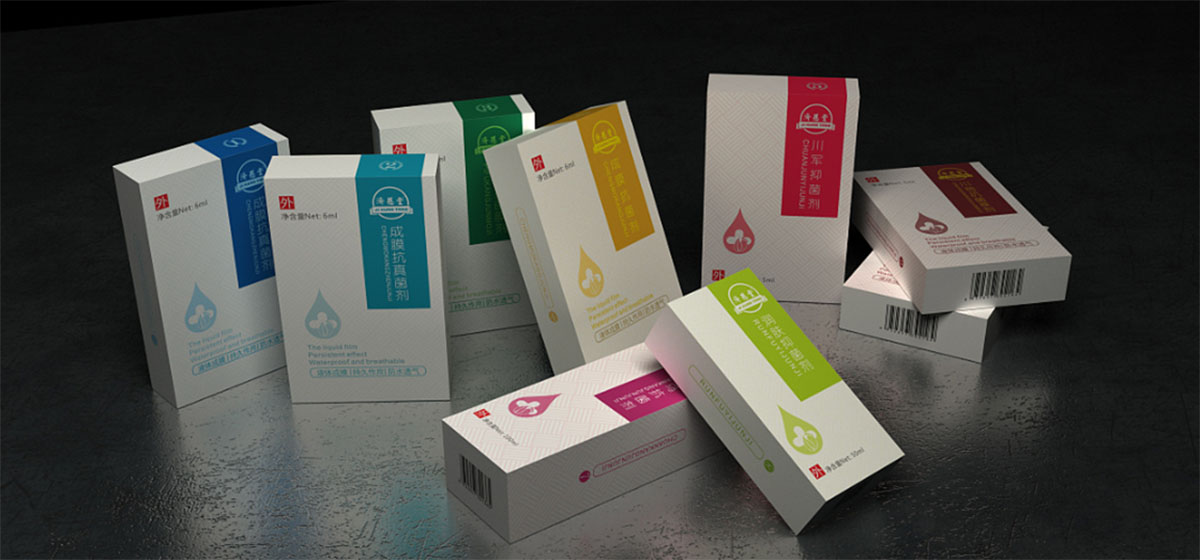
Second, pharmaceutical packaging testing items
In terms of pharmaceutical packaging, it is mainly divided into primary and secondary packaging, of which primary packaging refers to the packaging that contains, seals drugs or is used for dosage applications and is in direct contact with them. Secondary packaging refers to all other non-contact packaging, which generally includes printed or unprinted cartons, labels, instructions or inserts (attached pages), outer wrapping, etc. Pharmaceutical carton packaging is the most widely used secondary pharmaceutical packaging, today's pharmaceutical packaging carton is no longer a simple pharmaceutical packaging products, has carried more and more value and ancillary functions.
The most important function of pharmaceutical packaging is to ensure the quality characteristics and composition stability of drugs, and the materials used mainly include glass, plastic, rubber, metal, ceramics, paper and other materials. Medicines can only enter the circulation market with pharmaceutical packaging as the carrier, and the development trend of China's pharmaceutical industry is good, driving the continuous growth of China's pharmaceutical packaging market demand.
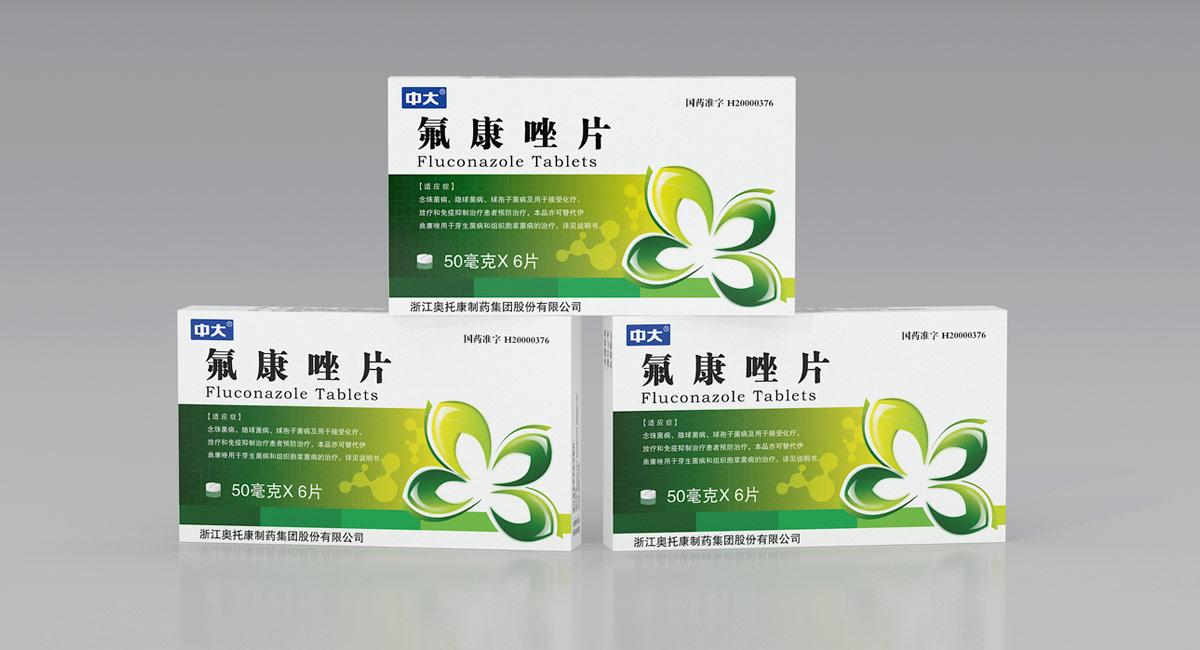
Summarizing the relevant domestic and international standards, the main indicators for the detection and control of pharmaceutical packaging and materials are: barrier performance, mechanical properties, slip, thickness, solvent residue, sealing performance, bottle cap torque, headspace analysis, printing quality, etc.
1. Barrier performance
2. Physical and mechanical properties: (1) Tensile strength and elongation, (2) peeling strength, (3) thermal sealing strength, (4) thermal shrinkage test, (5) puncture force test, (6) Puncture device retention test, (7) penetration point impermeability and injection point tightness test, (8) suspension force test, (9) aluminum-plastic composite cover opening force test, (10) Impact resistance, (11) tear resistance , (12) rubbing resistance, (13) pressure resistance.
3, thickness test
4. Friction coefficient test
5, solvent residue detection
6, drug packaging sealing performance test
7. Bottle cap torque detection
8. Overhead air body analysis
9, printing quality detection: (1) color control, (2) ink layer bonding fastness and wear resistance control.
Third, tobacco medical paper packaging raw materials physical and mechanical properties testing
Routine testing items include: thickness weight test, tensile strength and elongation test, composite film peeling strength heat sealing strength, paper surface smoothness test, paper stiffness and crease stiffness test, tear strength test, friction coefficient test, peeling and heat sealing strength test and other performance indicators.
Material thickness and gram weight test
Quantitative is one of the most basic performance indicators of paper-based packaging materials, quantitative refers to the quality of paper and cardboard unit area measured in accordance with the prescribed test method, the unit is g/m2. (Defined by ISO536)
Thickness is the basic performance parameters of paper-based materials or plastic film packaging materials, some basic characteristics and strength properties of paper and cardboard are related to thickness, so it is an important performance test item, the unit is μm or mm. Thickness testing must be carried out under specified conditions, and the thickness testing instrument must meet the three basic requirements of testing contact area, contact pressure and probe falling speed, otherwise the measurement results are inaccurate.
Tensile strength test
The tensile strength of paper-based materials or plastic film packaging materials is the maximum tensile strength that the fibers can withstand. This feature is particularly important for reel packaging materials used in printing presses. The test method is to take a sample with a cut width of 25 mm (mm) and a length of 150~200 mm (mm), and apply constant speed stretching at both ends of the paper length to measure the tensile tension, tensile strength and elongation of the sample when it is pulled.
Paper smoothness test
For high-end color box packaging such as tobacco and medicine, high-grade coating materials such as white card and gold card are commonly used. This kind of refined color box, generally on its surface will be printed beautiful graphics, the surface of the material must be good smooth performance, and smoothness is the index of assessing the smoothness of the paper.
The smoothness of the paper surface has a direct impact on printing, and the higher the smoothness of the paper, the more detailed and precise printing outlets can be used to produce higher quality prints. We require a paper with even smoothness, followed by a paper with high smoothness. The unit of smoothness is the time of air flow. The test principle is to use a quantitative air pressure on the surface of the paper on an area of about one square inch, so as to calculate the time of air flow along the surface. The longer the time, the higher the smoothness.
Paper bending stiffness test
Flexural stiffness is an index to evaluate the flexural rigidity of paperboard. The test principle is the force or moment required to bend the specified size of the sample to a certain Angle, is a measure of the strength of paper and cardboard bending performance indicators, in the packaging cardboard, the higher bending stiffness so that the cardboard has a certain stiffness and strength, high stiffness, beautiful appearance, flat, but it is too large, molding is more difficult, and will increase the cost.
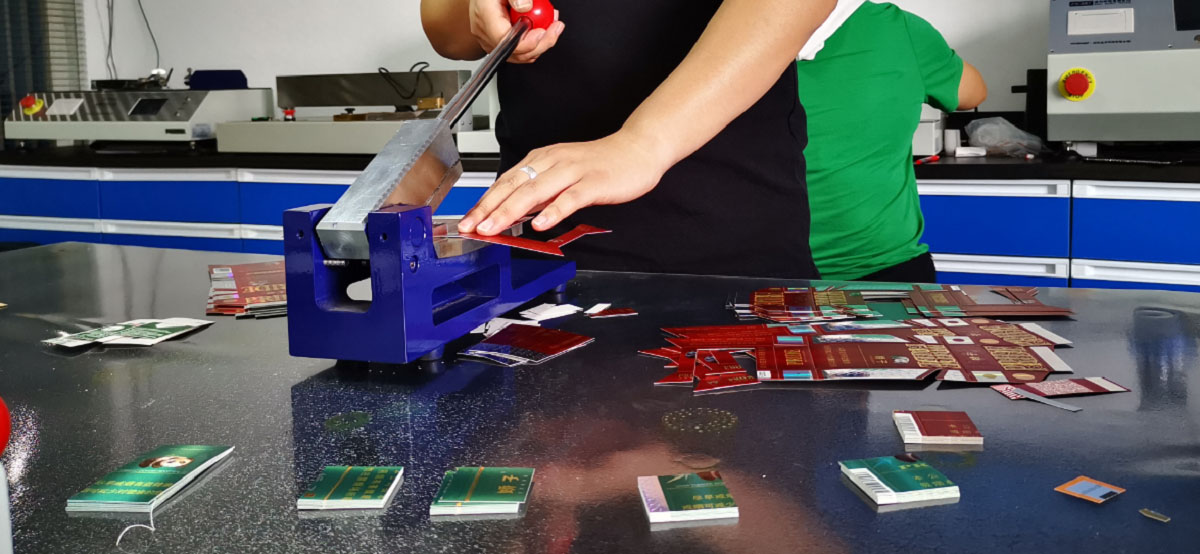
Carton crease stiffness and opening force test
Crease stiffness is an important indicator of high-end color boxes such as tobacco medicine. The main principle is to measure the indentation force (that is, the recovery force of 90° crease) of color boxes (such as tobacco medicine boxes).
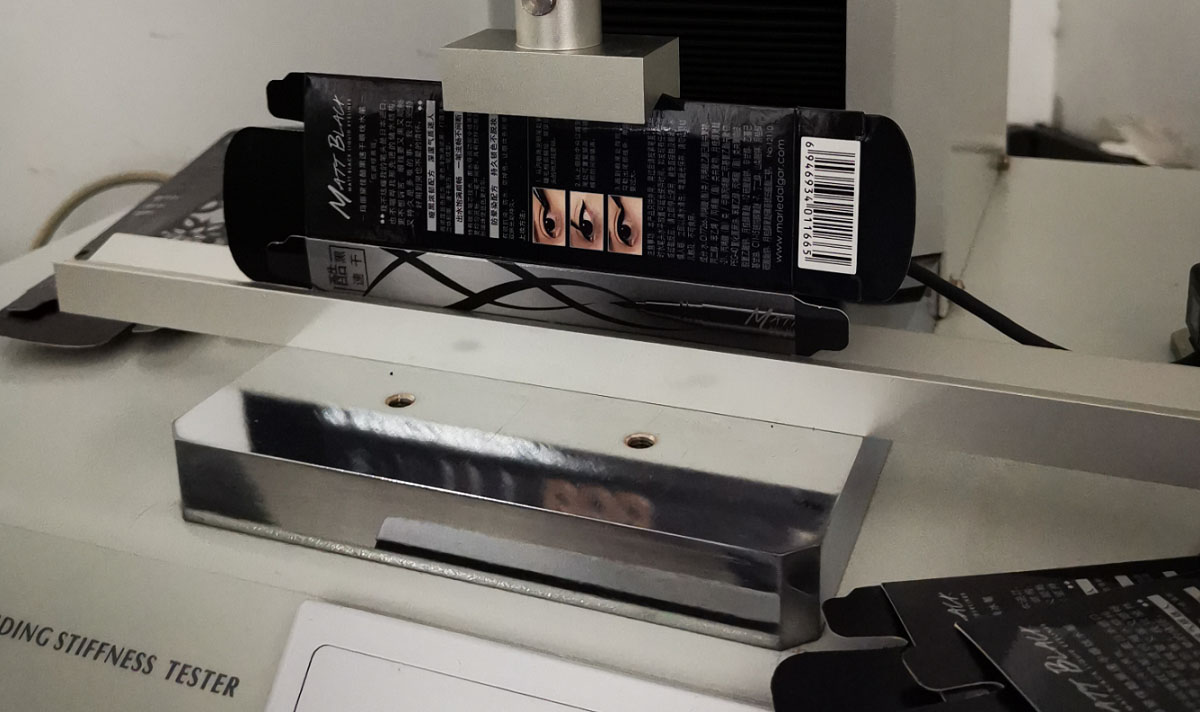
In the high-speed automatic packaging line, there are often unqualified cartons, such as irregular shape, bending and weak bonding, which reduces production efficiency. The reason for the above phenomenon is that the stiffness of the cardboard and the ratio of the crease force of the cardboard after indentation is not appropriate. The reason for the irregular shape of the carton is that the crease force is too small and deformed; The cause of poor adhesion is too much crease force, so it bounces off from the adhesive. The cause of the bending around the carton is that the indentation is too stiff compared to the cardboard, and the indentation tries to bounce off, and the cardboard does not have enough stiffness to stop it from bouncing off. The paper box with appropriate crease force and stiffness ratio is smooth and full after forming on the high-speed automatic packaging line, and the folding Angle is straight and sharp.
Tear strength test
Paper tear refers to the force required to tear a pre-cut sheet of paper or board sample under certain conditions, in mN. Tearing degree reflects the binding force between paper and cardboard fibers and the strength of the fibers themselves, which is a very important strength performance index for packaging paper and cardboard. The unit is Newton.
Friction coefficient test
The friction coefficient refers to the ratio of the friction force between two surfaces and the vertical force acting on one surface. The friction property of a material can be characterized by the dynamic and static friction coefficient of the material. If the friction coefficient of the packaging is low, it is easy to slip and seal the wrong edge when placing the rolled bag. If the friction coefficient is too large, it is easy to unroll, and even the flexible plastic packaging is stretched and deformed, and it is also easy to have poor opening of the packaging bag, affecting the filling efficiency of the contents. Therefore, controlling the appropriate friction coefficient is conducive to the smooth progress of the packaging process. Working principle: Two test surfaces are flat together, under a certain contact pressure, so that the two surfaces relative move, record the required force, calculate the static friction coefficient and dynamic friction coefficient.
Peel strength test
Peel strength refers to the maximum force required for unit width stripping of the bonded material from the contact surface. The peel Angle is 90 degrees or 180 degrees, and the unit is: Newton/meter (N/m).
Heat seal strength test
The test requirements for heat sealing strength are: the sample is centered on the hot sealing part, the two layers are opened at 180 degrees, the two ends of the sample are clamped on the upper and lower clamp of the computer tensile testing machine, the axis of the sample should coincide with the center line of the upper and lower fixture, and the tightness is required to be appropriate, the maximum force value of the test sample when it breaks, the unit is: N.
Fourth, tobacco medicine inner packaging printing quality inspection
Wear resistance test of printed surface
The surface strength of the box board is very important, in the corrugated board production process, the box board is forced to pull out of the surface will be subjected to a great deal of stress and strain, if the surface peeling strength is not good, the fiber on the surface of the cardboard will be pulled away or peeled off, in other processing machinery or transportation process the surface will also be caused by mutual friction and surface peeling. The peeling of the surface of the carton not only affects the appearance, but more importantly, may damage the printed graphic mark on the surface of the carton. Therefore, the wear resistance is an important performance index of the box board.
There are many methods for the determination of wear resistance. At present, the common method is the measurement of surface interaction under constant pressure, which is evaluated by the number of interaction times when the surface begins to peel.
Ink adhesion fastness detection
The adhesion fastness of the ink is one of the important indicators to assess the performance of the ink, only the ink has a certain adhesion fastness, in order to be well attached to the surface of the printed material, and only in this way will play the adhesion and protection of the ink to achieve the exquisite degree of color after printing.
There are many methods for the determination of wear resistance. At present, the common method is: the printing surface of two prints is relatively stacked together, and the pressure of 2-4 pounds is repeatedly rubbed, and the scratch mark or the ink falls off indicates that the ink adhesion is poor.
Color difference test
Due to various reasons in the printing process of the tobacco medical box, there is a color difference with the sample after the printing is completed, which leads to the quality of the printed matter is reduced. We analyze the causes of the color difference through the color difference detection of the printed matter, so as to achieve the purpose of effectively controlling the color difference of the packaging box.
Color difference detection Conventional portable color difference meter, with L,a,b values to represent the color value.
Fifth, tobacco pharmaceutical self-adhesive label detection
Self-adhesive labels are widely used in tobacco pharmaceutical packaging, and the testing items are mainly for the bonding performance test of self-adhesive labels (self-adhesive or pressure-sensitive adhesive). The main testing items include three indexes: initial adhesive property, adhesive holding property and peel strength (peel strength).
Initial viscosity test
In the initial viscosity test, the inclined plane rolling ball method was adopted to test the initial viscosity of the sample through the adhesion effect of the adhesive tape on the steel ball when the adhesive surface of the sample was briefly contacted with a small pressure. The maximum steel ball number that can be adhered to was used to characterize the initial adhesion property of the self-adhesive.
Adhesion energy detection
It is necessary to hang the test board affixed with adhesive tape samples on the test rack vertically, and hang the weights of the specified weight at the lower end. The adhesive displacement of the sample after a certain period of time or the time when the sample is completely detached are used to characterize the adhesive property of the self-adhesive label.
Peel strength test
The peeling strength is an important indicator to measure the bonding performance of the self-adhesive label, and the detection of this indicator can usually be carried out by a computer tensile testing machine.
6, tobacco medicine outer box transportation packaging testing
Cosmetics after transportation, shelf display and other links to intact reach the hands of consumers, you need to have good transportation packaging. At present, the transportation packaging of tobacco medicines is mainly based on corrugated cartons. The conventional test and control indexes are compressive strength test, stacking performance test, drop strength test and vibration performance test of cartons.
Compressive strength test
The method of empty box compression test or in fact container compression test is: the test sample is placed in the middle of the upper and lower pressure plate of the compression test machine, and the upper pressure plate is applied evenly at a certain speed on the top of its pressure until the sample is resistant to collapse, in order to assess the ability of the carton to withstand the maximum external pressure.
Stacking performance test
Stacking test is a kind of static pressure simulation of warehouse storage state test, mainly only for cartons and all kinds of packaging containers stacking test, through the carton stacking test to understand the quality of the tested products! Is the carton and packaging container manufacturers must understand the application of detection methods! It is of great significance to product quality control!
Drop strength test
It is used to test and evaluate whether the current packaging methods and materials can provide effective protection against unexpected drops, impact pressures and vibrations that may be encountered during the production, use, storage and transportation of the product, and to verify the impact strength of each structure or component of the product.
Vibration performance test
Transportation is an inevitable link in the process of circulation. The package will vibrate during transportation, regardless of the means of transportation used. According to statistics, about 1/3 of the product damage caused by various environmental factors is caused by vibration. The vibration test simulates the vibration that the transportation package may encounter during the circulation process, detects whether the package is used as a insulation, and assesses the protection ability of the package's internal contents.
The vibration waveform of vibration test can include sine wave, triangle wave, sawtooth wave, square wave and so on. Because the generation, control and measurement of sine wave are relatively easy to achieve, in the actual process, the waveform of vibration is also similar to sine wave, or can be broken down into sine waves of different frequencies, therefore, sine vibration test is a commonly used simulation method, if you do not do special instructions, vibration test generally refers to sine vibration test.